Samburu Positive Living Network wasn't built by an institution — it was built by people who refused to let their neighbours face HIV alone. Here's who they are.

"I started this network to support and advocate for PLHIV."
Every network has a first meeting, and this one started small — a handful of neighbours in Samburu County who had one thing in common: an HIV diagnosis, and nowhere to talk about it openly. Ekadeli Echoto was among the first to bring them together. In a region where stigma often arrived faster than treatment, he made a decision that would define the next two decades of his life — that no one else should have to sit with that news alone.
What began as informal conversations over tea grew, almost without anyone planning it, into something more structured: a rotation of home visits, a shared understanding of how to talk to a newly diagnosed neighbour, and eventually, a name — Samburu Positive Living Network.
Turning a support circle into a county-wide organisation took more than good intentions. Ekadeli spent years building the systems that make SPLN work today: recruiting and training community health volunteers, negotiating relationships with county health officials, and holding the network together through funding gaps and difficult seasons.
He now sits on Samburu County's HIV Technical Working Group, representing the community's voice in decisions that used to be made without it — and has personally trained more than 200 community health volunteers who carry that same door-to-door commitment into villages he could never reach alone.
Under his leadership, SPLN has become the first call for newly diagnosed families across Samburu — not a distant service, but a familiar voice, usually someone from the same village. That shift, from institution to neighbour, is the thing Ekadeli is proudest of, and the standard he still holds every new programme to.
Two decades on, he is still the person new volunteers meet first, and still, by his own account, doing the same work he started with — making sure no one faces this alone.
Behind every home visit, every training cohort and every shilling accounted for is a small team that makes SPLN's work possible.

"Training someone isn't the finish line — it's the start of them changing their own village."
Simon designed the curriculum that has taken more than 200 community members from first-time volunteers to trained peer counsellors capable of running a home visit on their own. It's a role that sits at the intersection of clinical knowledge and hard-won local trust — and Simon has spent years refining both.
He works closely with Samburu County's health department to keep SPLN's home-based care model aligned with national guidelines, while making sure it never loses the community-first approach that makes it work in the first place.

"Trust is the only currency that matters more than money here — and you keep it by being boring and exact."
Beatrice manages the financial backbone of an organisation that runs on donor trust as much as donor funding. Every home visit and training cohort passes through the systems she built — systems designed for one purpose: so that anyone, from a first-time donor to a county auditor, can see exactly where every shilling went.
That discipline has made SPLN one of the more financially transparent community organisations operating in the region, and it's a standard Beatrice has never been willing to compromise on.

"A story tells you what happened to one family. Data tells you whether it's working for all of them."
Emmaculate's job is to make sure SPLN's impact isn't just felt, but proven. She built the tracking systems that follow members from first contact through ongoing care, turning what used to be anecdote into evidence donors and county partners can act on.
That evidence base has become one of SPLN's quiet strengths — it's how the network knows which villages need more volunteers before a gap becomes a crisis, and how it can show, year after year, that the model actually works.
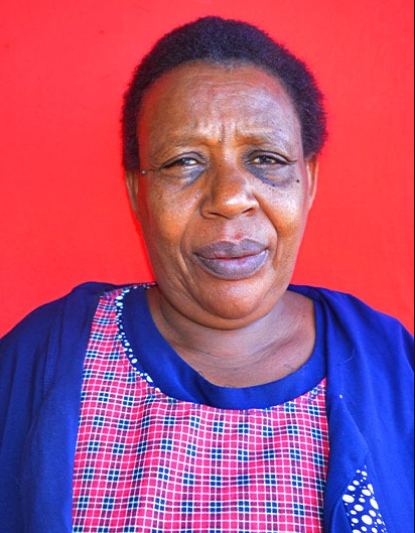
"Good governance is what lets a community organisation last twenty years instead of two."
Ann sits on SPLN's board, bringing an outside perspective to how the organisation is run — helping set strategy, review performance, and hold leadership accountable to the communities SPLN serves.
