
The day began at 9:00 a.m. with a procession from Samburu County Referral Hospital to Green Garden, and it ended almost four hours later with a number worth sitting with: 22 children graduated HIV-negative from the HEI programme, in front of a crowd that included the County Commissioner, county health leadership, and partners from across Samburu.
Samburu Positive Living Network (SPLN) is a community-based organization registered under the Ministry of Gender and Social Services, sub-granted by the Kenya Red Cross Society through the Global Fund to implement Global Fund Cycle 7. This year's World AIDS Day theme, set nationally, was blunt about where the work still needs to go: "Public Education and Advocacy in Ending AIDS among Adolescents and Young People." Adolescents and young people now account for roughly 40% of new HIV infections nationally — caught in what the sector calls the "Triple Threat" of new infections, teenage pregnancy, and gender-based violence.
Weeks of groundwork before December 1st
The first planning meeting was held on 29th October at the county commissioner's office, where the Regional NSDCC Coordinator laid out the national concept note and theme. A second planning session on 20th November, chaired by the Sub-County AIDS and STI Coordinator, locked in roles, timelines, and a run of pre-WAD activities meant to build momentum before the main event.
Male engagement meetings on GBV, HIV education during a football match at Maralal Stadium, and rite-of-passage sensitizations reach boys and young men across Maralal.
Community dialogues with PLHIV, defaulter tracing, and PMTCT missed-opportunity follow-up run alongside GBV dialogues in Nachola and Baawa, supported by SPLN, UTJ, and the Department of Health.
World AIDS Day itself: procession, tree planting, speeches, edutainment, and the HEI graduation at Green Garden.
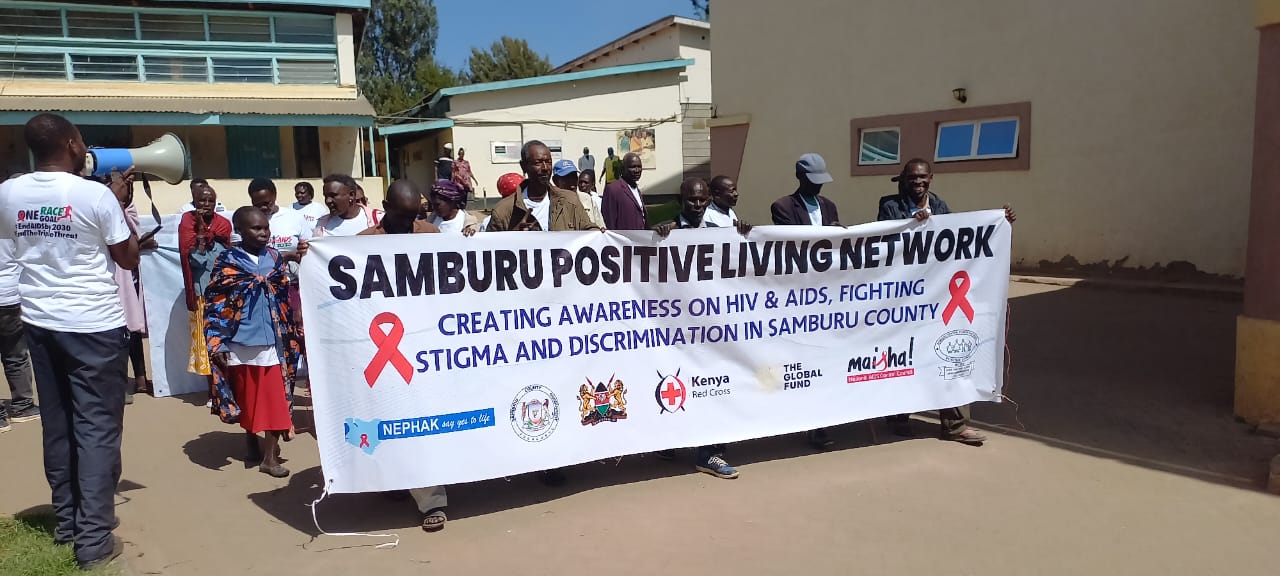
A programme built around every voice in the room
Letiwa and Dickson opened the day as MCs, leading a procession into Green Garden. Speeches ran from 10:00 a.m. to 12:30 p.m., interspersed with performances from the HWWK skit group, the SCTRH choir, and the Morans choir — each one built around the triple-threat theme. Voices included PLHIV champions, the Sub-County Administrator, the Departments of Gender and Health, and partner organizations from Red Cross to Child Fund to local PWD networks.
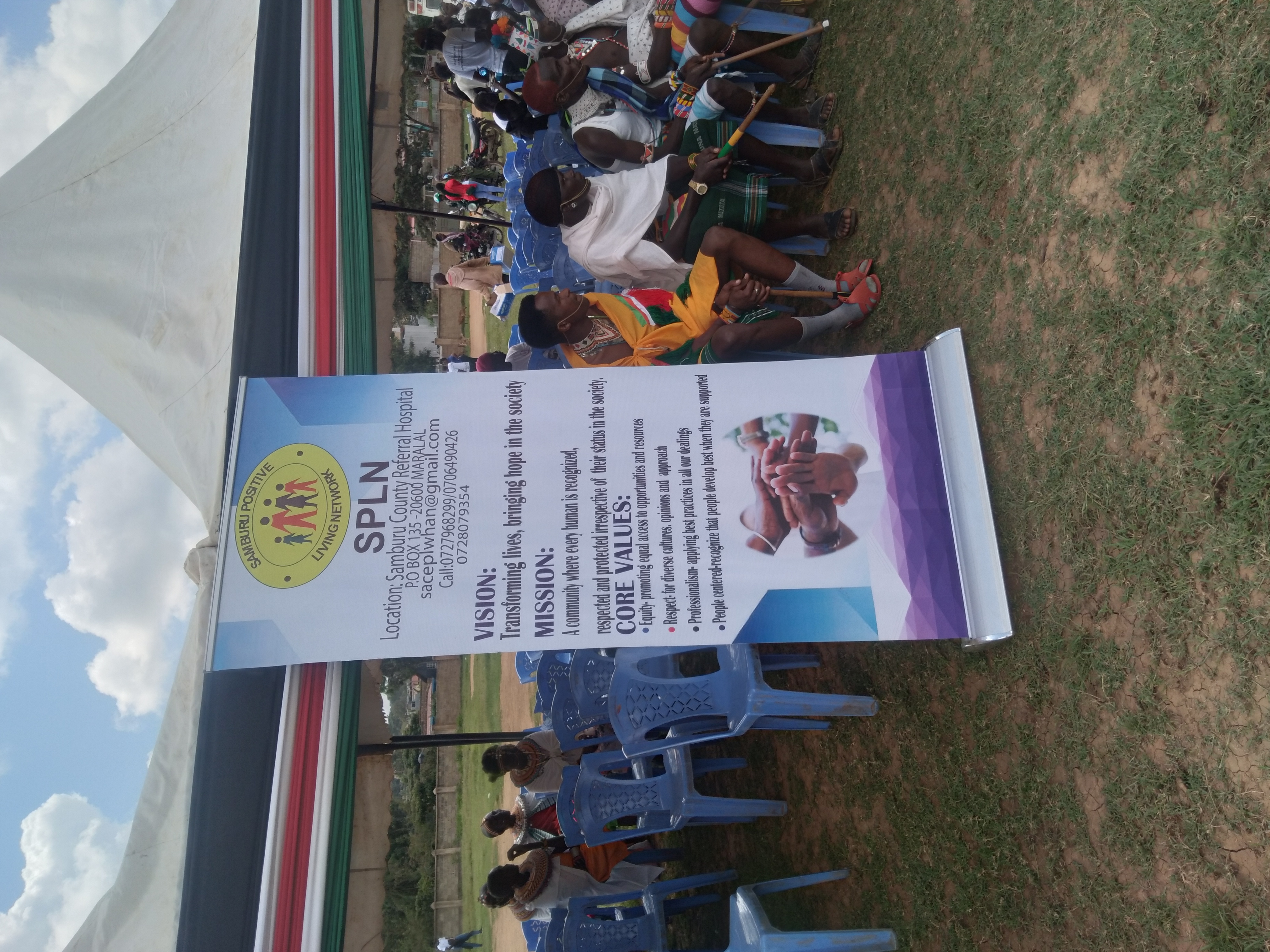
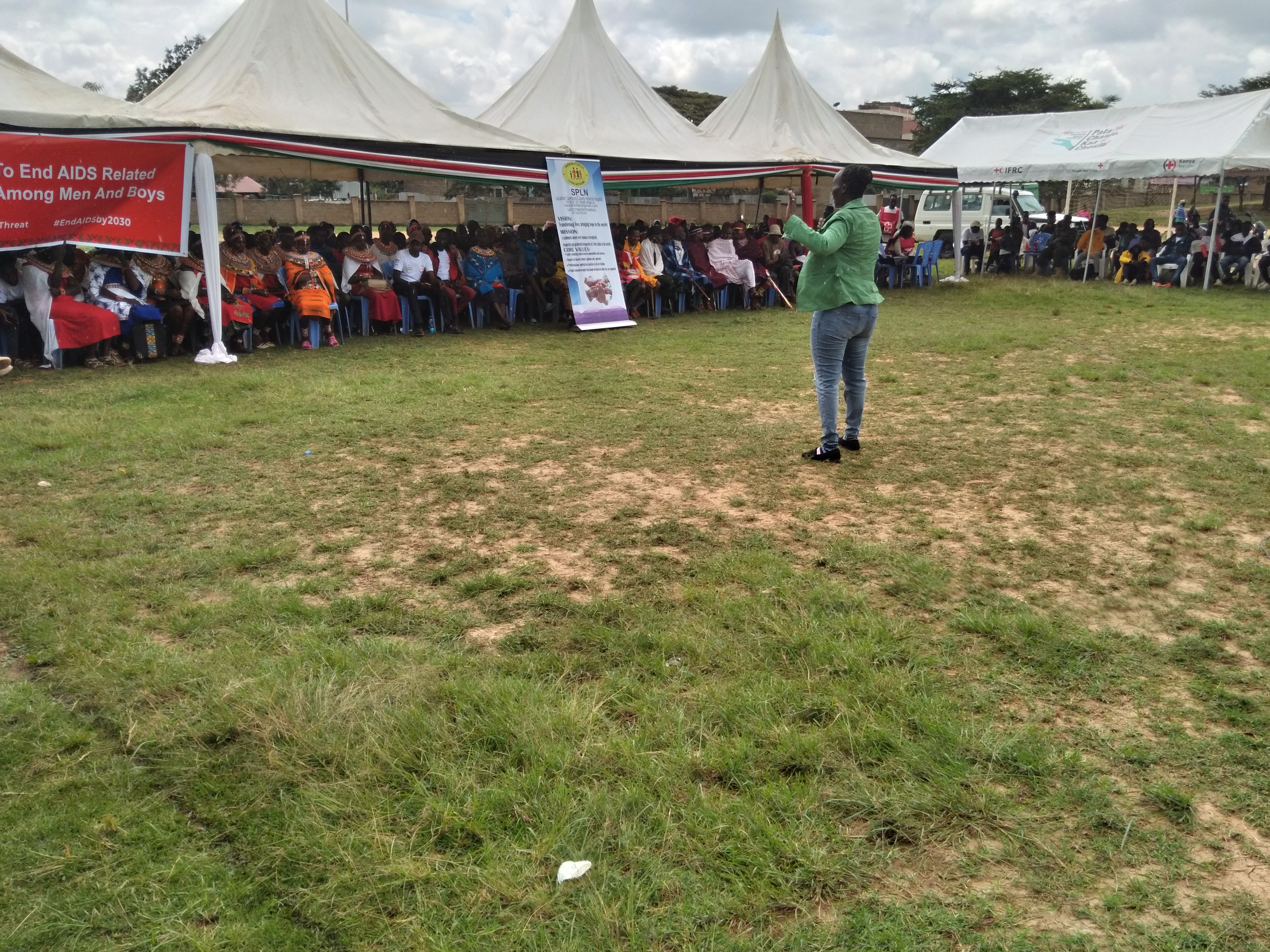
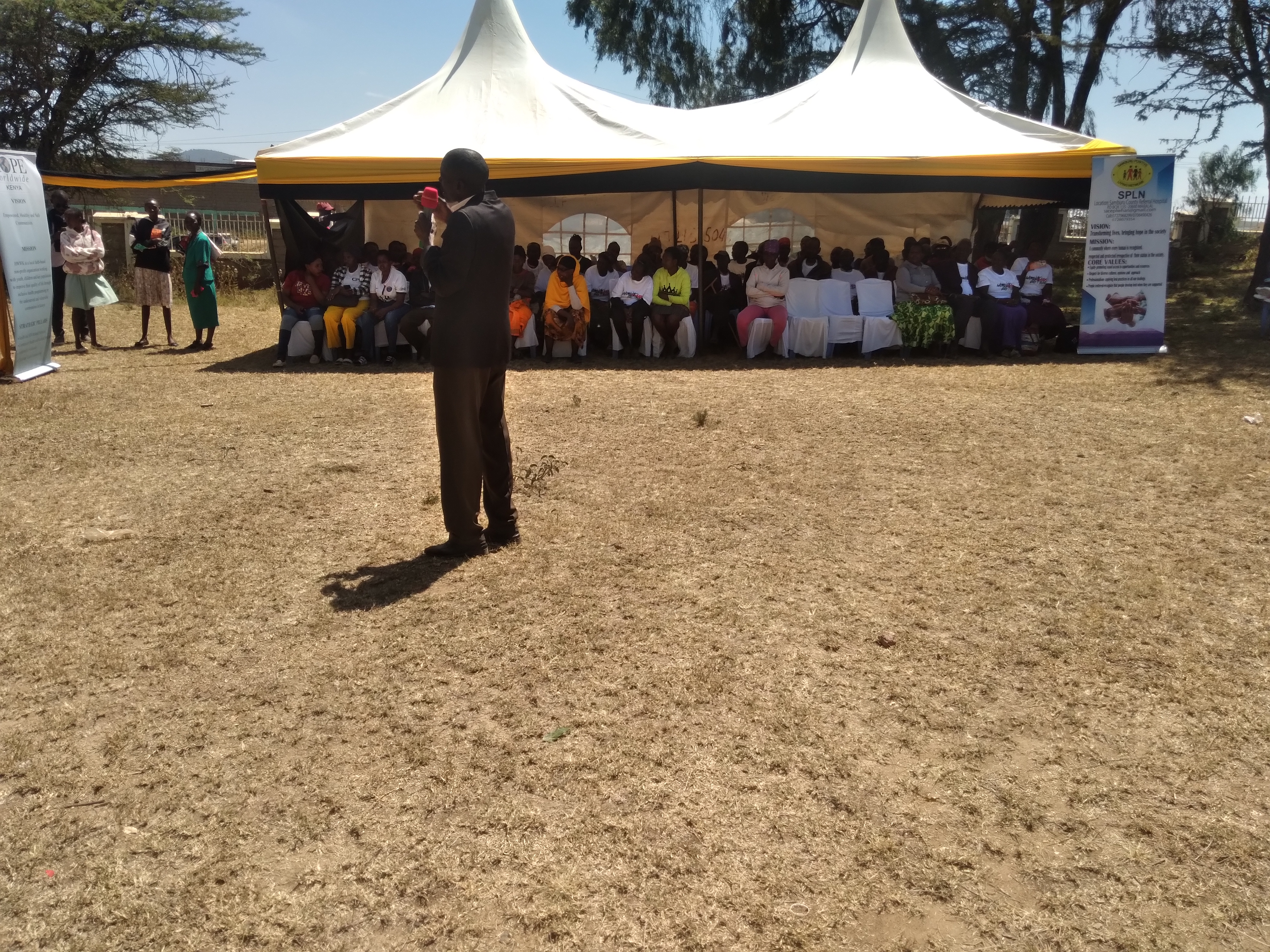
What the day added up to
Beyond the 22 HEI graduations, more than 600 men were reached with Triple Threat messaging, boys undergoing rite-of-passage ceremonies were sensitized on HIV/AIDS, and defaulters identified earlier in the month were traced and returned to care. A hundred T-shirts, 200 milk packets, and 100 loaves of bread were distributed on the day.
Male involvement is key in ending SGBV — and adolescents and young people can be involved in decisions about their own health. Lessons learnt, WAD 2025 report
What's still hard
Resources remained tight relative to the scale of the county, and Samburu's terrain makes it genuinely difficult to reach every adolescent and young person who needs these messages. The team's own conclusion is straightforward: community sensitization on the Triple Threat, delivered through ongoing dialogues rather than one day a year, is what actually moves the needle on HIV, GBV, and teenage pregnancy together.
Shared with
SPLN Executive · Regional Program Coordinator · Regional M&E Officer · Project Officer · Finance Officer
Twenty-two children graduated HIV-free this World AIDS Day. Behind that number sits months of dialogues, football pitches turned into classrooms, and a county quietly deciding that ending AIDS among its young people isn't a one-day commemoration — it's the work in between.